MoveMate

MoveMate

A social computing approach to re-imagining fitness through community

A social computing approach to re-imagining fitness through community

A social computing approach to re-imagining fitness through community

Role

UX Researcher

Interaction Designer

Team

5 members

Timeline

6 weeks

The Challenge

Many individuals make it a goal to begin their fitness journey. However, the initial steps can be daunting and overwhelming.

Many individuals make it a goal to begin their fitness journey. However, the initial steps can be daunting and overwhelming.

Many fitness experiences assume solitary participation, overlooking opportunities for community-driven engagement.

While current fitness applications facilitate limited social engagement among acquainted individuals, they fail to extend these connections beyond in-app communication.
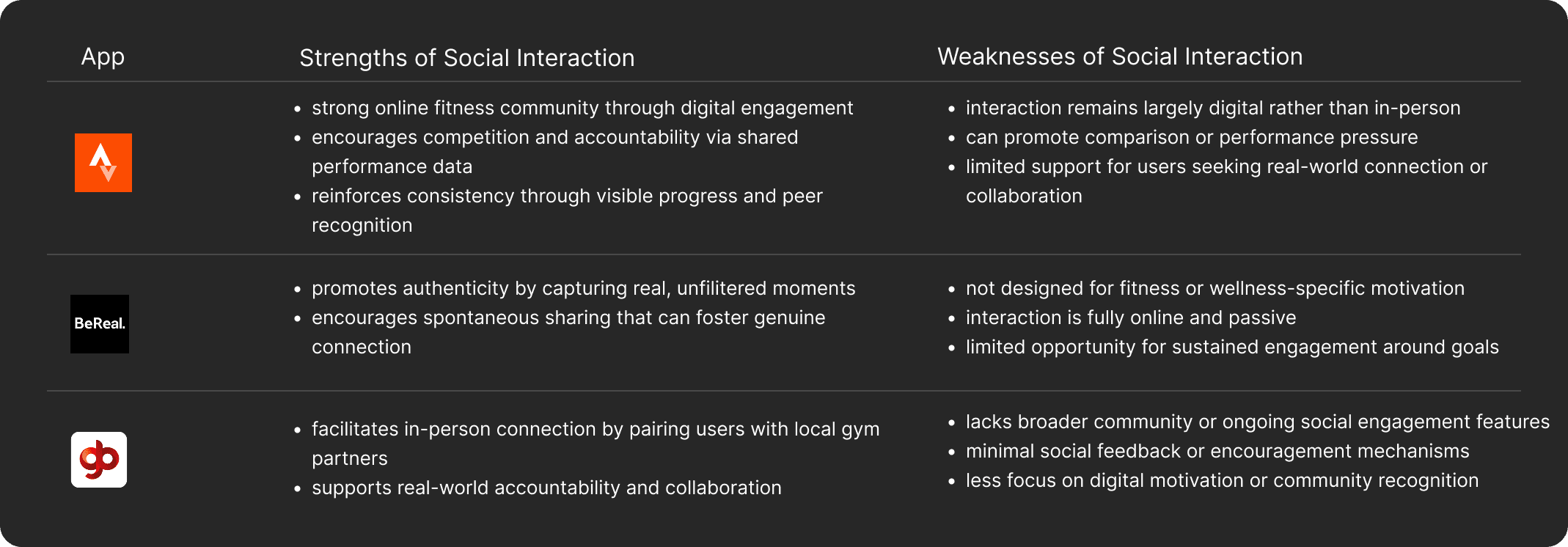
How might we leverage social and digital connections to foster a motivating fitness community that supports individuals in achieving their personal goals?

How might we leverage social and digital connections to foster a motivating fitness community that supports individuals in achieving their personal goals?

Our Solution

No more solo sessions, it’s all about shared success

No more solo sessions, it’s all about shared success

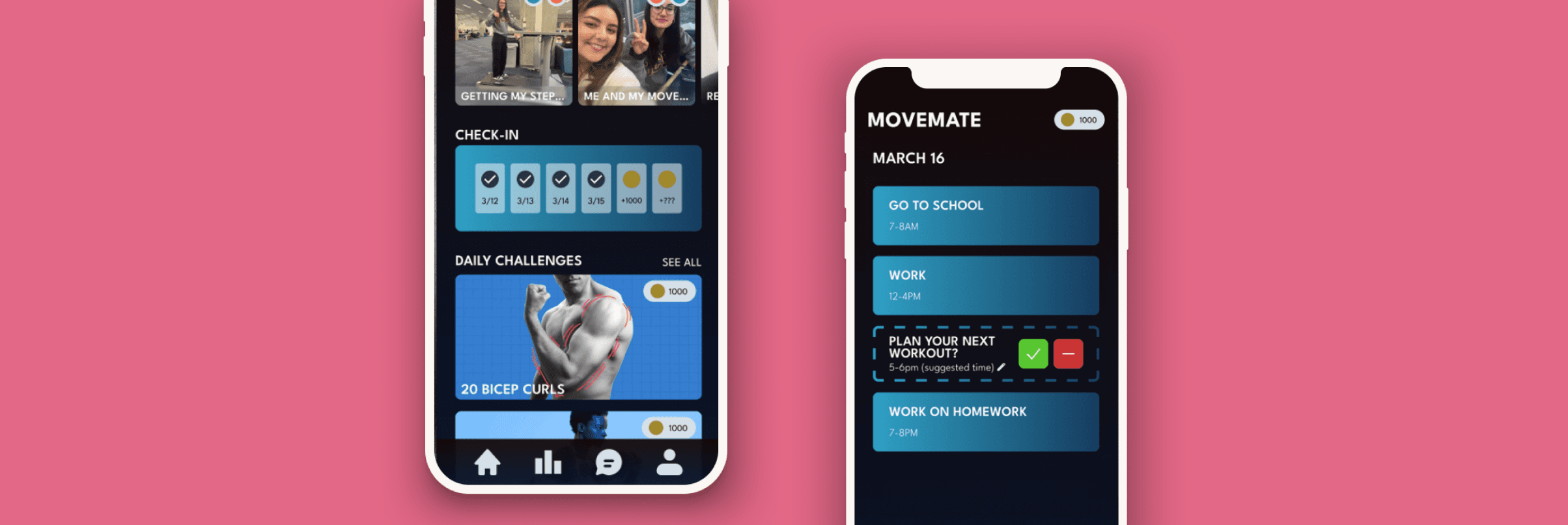
Say hello to your game-changer: MoveMate. Meet people in your area to keep you accountable for getting your movement in.

By leveraging the communal nature of gyms, the platform encourages users to connect, share progress, and motivate one another in shared local spaces.

This approach addresses the challenges new gym-goers face in maintaining routines by creating opportunities for mutual support, balancing individual success with collective motivation, and fostering engagement through social accountability.

Join & motivate others in local workouts

Schedule sessions in your area to avoid long commutes

Confirm workouts through simple photo check-ins

Earn recognition and incentives for consistency

Our Approach

By looking at our users through a social computing lens, we focused on the connections between people, not just the interface between person and screen.

By looking at our users through a social computing lens, we focused on the connections between people, not just the interface between person and screen.

Through piggyback prototyping, we were able to rapidly test our ideas and observe how 38 users engaged with the MoveMate experience firsthand.

Apps we used to simulate the experience

User Flow
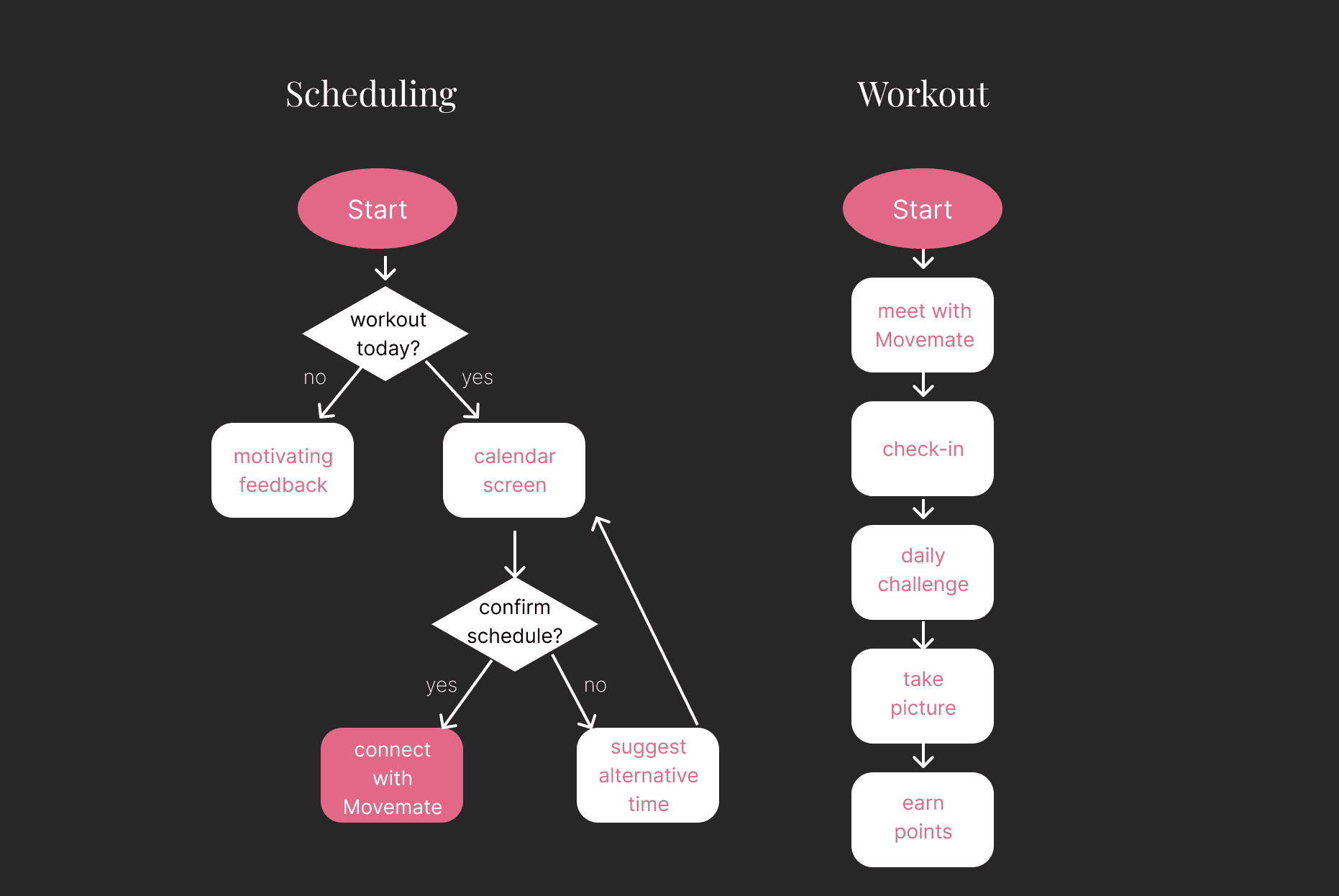
Defining the path from scheduling to connection

Defining the path from scheduling to connection

The user flow illustrates how new users navigate through MoveMate — from onboarding and pairing with a workout partner to completing daily challenges and tracking progress. Mapping this flow helped us clarify key decision points, simplify interactions, and ensure a smooth experience that motivates consistent engagement.

Prototyping V1

First Contact: Users meet their MoveMate

First Contact: Users meet their MoveMate

We conducted a “Wizard of Oz” live prototyping session with 38 users to observe real-time interaction and community dynamics. This method allowed us to test key social behaviors and identify moments of friction and engagement before committing to full product development.

Onboarding

Through Airtable, users were asked a series of questions related to their availability & personal goals.
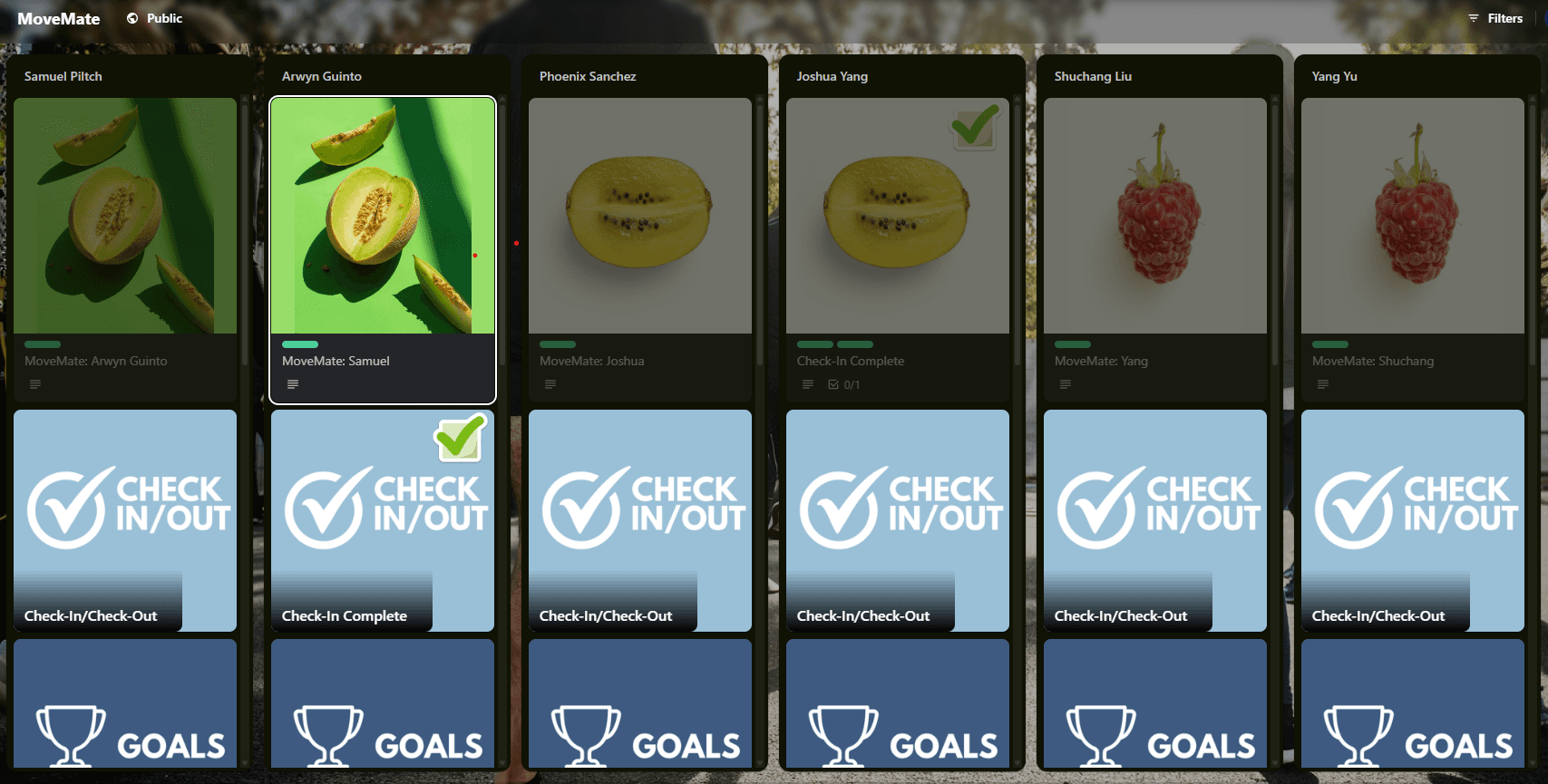
User Profiles

The Airtable was synced via Zapier to Trello and users were able to locate their profiles populated with their information.
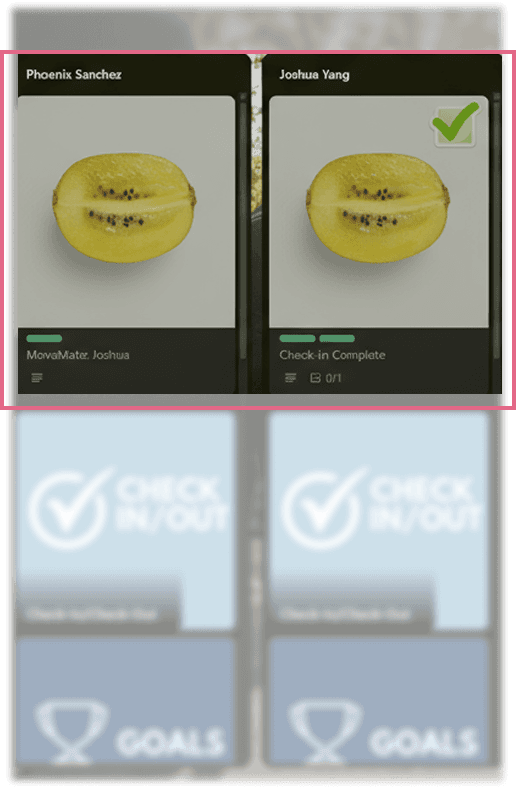
Meet your Movemate

Users were matched according to their availability and were asked to find the person with the same fruit as them.
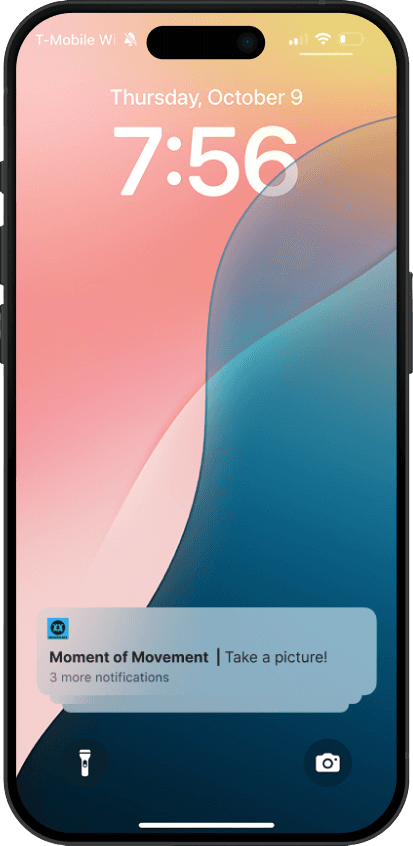
Moment of Movement

Users were prompted to take their accountability picture with their partner.

Post to the feed

To simulate the social feed experience, users uploaded photos with their Movemate to a Padlet board, enabling interaction through comments and likes.

Prototyping V1

Feedback from Users

Feedback from Users

Users completed a post-session survey to help us collect feedback to improve the social interaction prompted by MoveMate.

“Will you be matched with the same person every day, and if so, what happens if your partner does not go but you do?” 

“Is this an everyday activity? Consider how you might simulate the passage of time.”

“Seeing other people with their pairs was another extrinsic motivator besides the obvious prizes.” 

Considerations for Next iteration:

  • How might we organize partnerships so that the individual users are not penalized if their MoveMate is not available one day?

  • How can we simulate multiple days in a prototype session to create a more realistic experience?

  • While using a third party application to piggyback our prototype, how might we elaborate on the design to improve the user’s experience?

Prototyping V2

Supporting individual success within a community framework

Supporting individual success within a community framework

During this live session with 40 individuals, we incorporated user feedback to strengthen MoveMate’s emphasis on autonomy and personal progress.
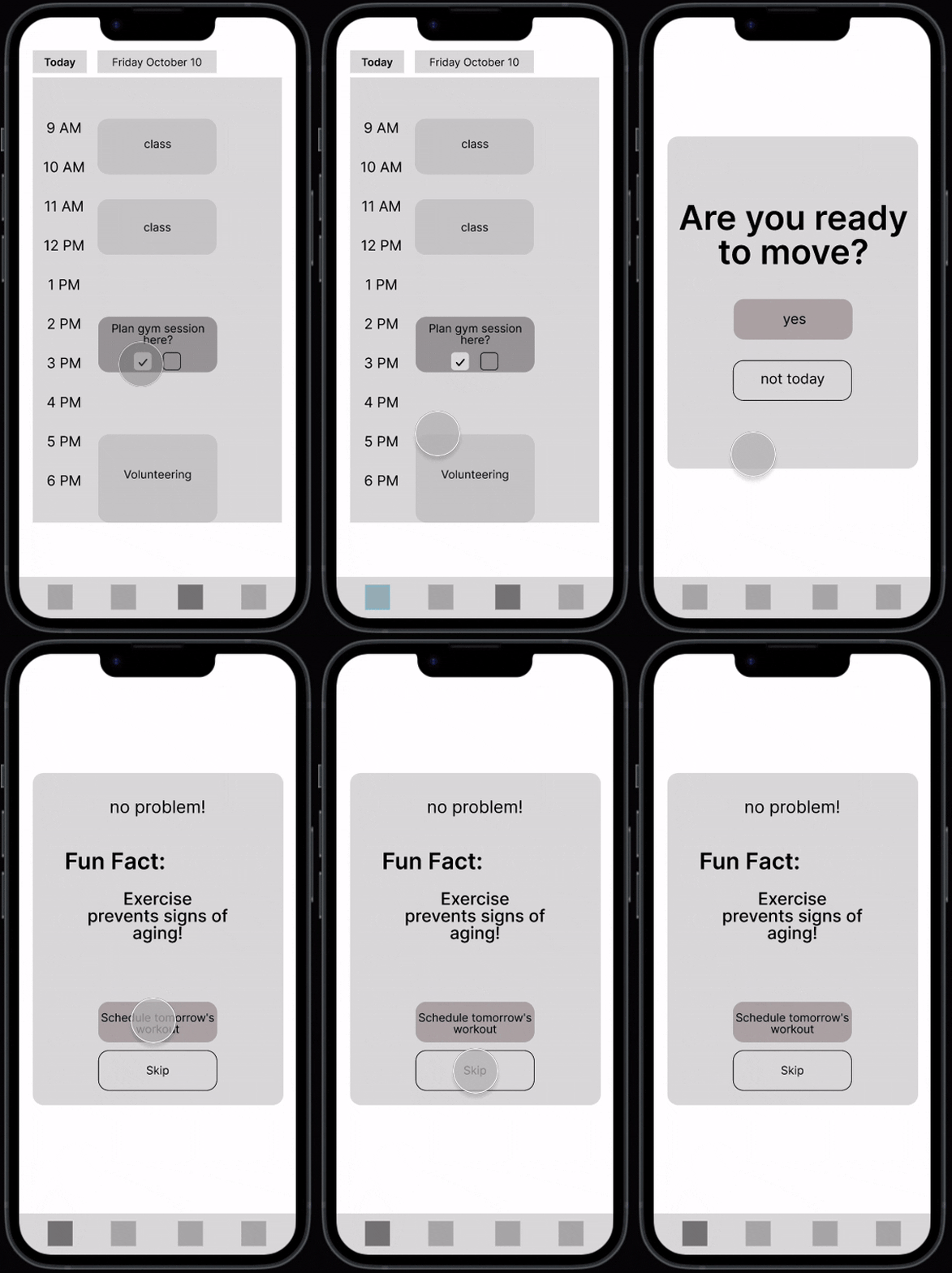
Simulating the passage of time

Simulating the passage of time

Understanding that motivation toward fitness can vary, we created a dynamic daily interface that encourages reflection and choice. Users are welcomed with an inspiring prompt to either commit to movement or explore other meaningful ways to stay engaged.

Understanding that motivation toward fitness can vary, we created a dynamic daily interface that encourages reflection and choice. Users are welcomed with an inspiring prompt to either commit to movement or explore other meaningful ways to stay engaged.

Individual Progress

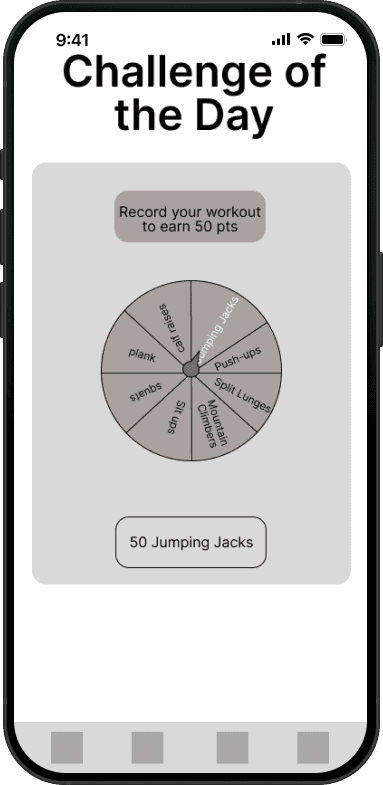
To sustain motivation and flexibility, we designed a daily challenge wheel that assigns users a new physical activity each day. MoveMates can continue earning points toward their goals even when their partner isn’t available.

This feature maintains the spirit of collaboration while recognizing that fitness journeys must adapt to real-life circumstances.
Final Prototype

Designing for connection, not just screens

Designing for connection, not just screens

While UI design wasn’t the core focus of this project, clarity and ease of use were still essential to the experience. In this iteration, we translated feedback from live sessions into interface refinements that improved flow, accessibility, and user confidence.
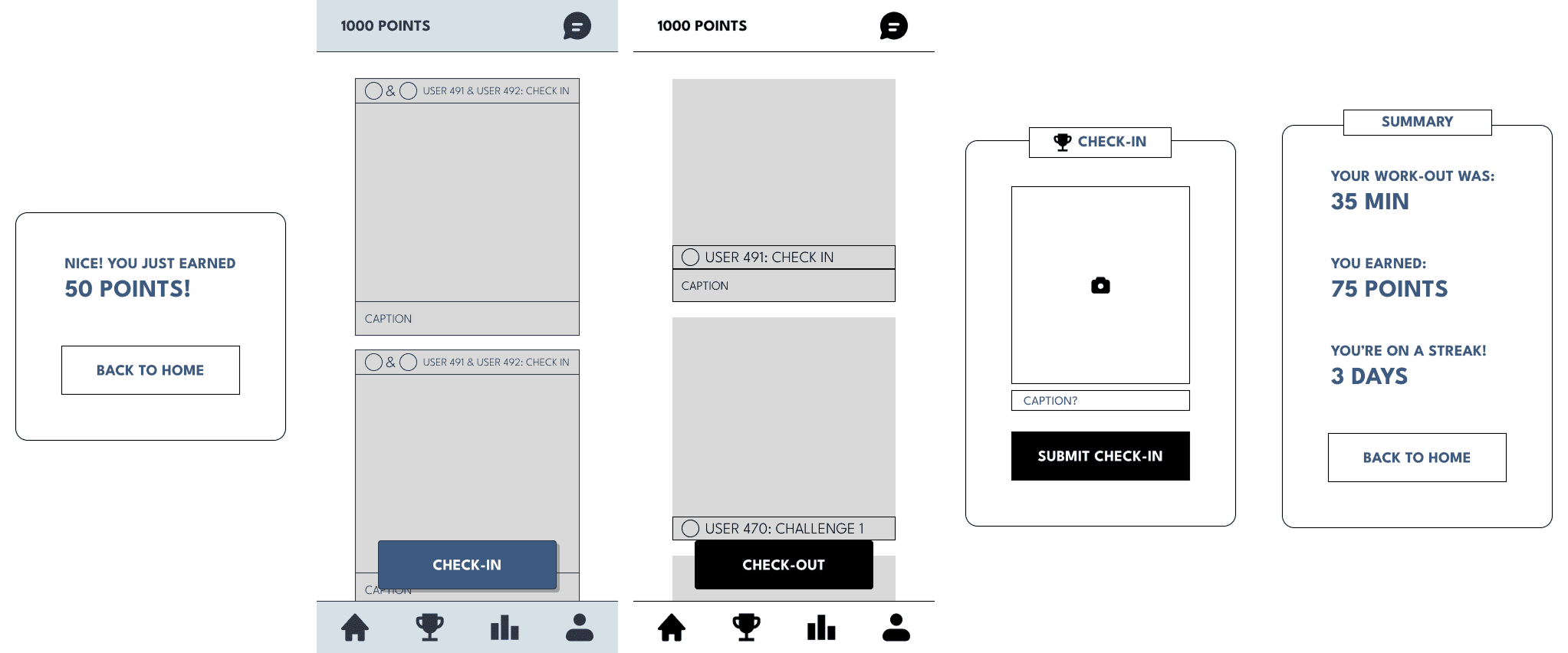
Wire frame for check-in process

Final Prototype Considerations

Final Prototype Considerations

  • Separate feed and profile screens

  • Simplified bottom navigation

  • Integrated workout scheduling

  • Contact-based friend connections

  • Streamlined prize redemption

  • Expanded activities beyond the gym

  • Separate feed and profile screens

  • Simplified bottom navigation

  • Integrated workout scheduling

  • Contact-based friend connections

  • Streamlined prize redemption

  • Expanded activities beyond the gym

Key Takeaways

What I Learned Through the Design Process

What I Learned Through the Design Process

Through designing MoveMate, I gained a deeper understanding of how social environments shape user motivation and engagement—particularly within shared spaces like fitness gyms.

Through designing MoveMate, I gained a deeper understanding of how social environments shape user motivation and engagement—particularly within shared spaces like fitness gyms.

Leveraging social accountability

Leveraging social accountability

Leaderboards and community challenges proved to be powerful motivators. Designing visible progress systems transforms accountability into a positive, community-driven experience that fosters long-term participation.

Leaderboards and community challenges proved to be powerful motivators. Designing visible progress systems transforms accountability into a positive, community-driven experience that fosters long-term participation.

Balancing Individual Goals with collective support

Balancing Individual Goals with collective support

While users value personal achievement, they also thrive on connection. Successful designs should balance individual autonomy with shared experiences to maintain both motivation and flexibility.

While users value personal achievement, they also thrive on connection. Successful designs should balance individual autonomy with shared experiences to maintain both motivation and flexibility.

Designing with sensitivity to social context

Designing with sensitivity to social context

Social features, such as photo sharing, require attention to timing and comfort. By allowing users to check in before workouts or use alternative ways to mark progress, we created a more inclusive experience that respected varied comfort levels.

Social features, such as photo sharing, require attention to timing and comfort. By allowing users to check in before workouts or use alternative ways to mark progress, we created a more inclusive experience that respected varied comfort levels.

Melinda Renteria © 2025

made with ♡ & a lot of coffee

Melinda Renteria © 2025

made with ♡ & a lot of coffee

Melinda Renteria © 2025

made with ♡ & a lot of coffee